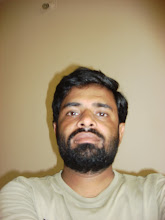
Three time riot victim sets record in blood donation.
Shamsuddin Sheikh, resident of chamanpura area of Juhapura (Ahmedabad) recently set a record in blood donation in India. According to Ahmedabad Red Cross society, sheikh is the first handicapped Muslim blood donor who has donated more than 75 times. Amdavad new textile mill’s worker Samsuddin Sheikh has been actively involved in blood donation since last 25 years. Interestingly, in 2002, communal riots in the city have worst affected samsuddin Sheikh’s family. He lost all property. “It was not the first riot when I lost my whole property, even in 1969 and subsequently 1992 riots too had affected me a lot.” Sheikh recalled.
Despite the all-odd circumstances, Sheikh never lost his faith in humanity. He says, “ As a victim I deeply feel what happens when some one lose his or her loved ones in communal riots. But we can make deference by doing such thing like blood donation. It helps me to bridge between two communities.”
Sammsuddin is among the Muslim who broke myths regarding blood donation in Amdavad. Now, Sheikh’s efforts have made an impact on his co-workers. “ 20 years ago I was alone to go Red Cross and donate blood, right now more than 25 persons around me who regularly donates blood.” Sheikh said proudly.
Tuesday, July 31, 2007


Monday, July 9, 2007
The walk to find knowledge
Although India is experiencing huge economic growth, it is also a place where 700 million people still live in the countryside, a world away from the nation's newly acquired shiny image.
But among this vast rural population lies a wealth of wisdom and expertise that has a value all of its own.
Professor Gupta has an engaging smile and a compelling interest in everything
I have just been on a pilgrimage, on foot, across a bit of rural India.
Not to get to a shrine, a saint or a temple.
The point of the walk was the villages we encountered on the way, and the traditional skills and knowledge locked up in them.
This is not the first time I have talked about a remarkable professor called Anil Gupta, who teaches at the Indian Institute of Management in Ahmadabad.
It is, by the way, the hardest management school to get into in the whole world.
He is the moving spirit behind something called the Honeybee Network, a now vast repository of often clever rural inventions and village wisdom about plants and animals in danger of being forgotten in the new brand name-driven India.
Honeybee celebrates this lore and tries to get financial backing for the best ideas.
And for the past eight years, Professor Gupta has taken to the dusty roads of rural India on what is called, in the ancient Indian language of Sanskrit, a Shodhyatra... a walk to find knowledge.
The fanfare of India
Twice a year, in searing summer heat or chilly winter, Professor Gupta and 60 or 70 of the inspired, the curious, and veteran rural innovators traipse out to remote places.
The walks last about a week, as the pilgrims journey from village to village along rutted ox cart tracks and noisy main roads, honked at by endless motor horns - the fanfare of India.
Being part of the Shodhyatra is an extraordinary experience, a confusion of travelling circus, revivalist meeting and Gandhi brought back to life.
At walking pace in a country that lives outdoors, things happen.
People who know inventors dash up to the pilgrims.
The walkers themselves dive off the path into a field to clip off a twig of an unfamiliar shrub.
Warm welcome
A farmer diverts the walkers to examine his new discovery, a rogue mustard plant that produces all its seed at once, not frond by frond
In the middle of the crowd moves Professor Gupta - tall, bearded, dressed in white - has an engaging smile and a compelling interest in everything.
We stop to admire the individual patterns the women create on the walls of the shelters they build to protect the precious store of handmade cow dung patties used for fuel.
A few miles further and there is another huddle as the professor launches into an off-the-cuff inquiry into the positive uses of the word "crack", inspired by the parched earth before us.
A farmer diverts the walkers to examine his new discovery, a rogue mustard plant that produces all its seed at once, not frond by frond.
In every village, we are greeted and garlanded, and then there is a meeting under the spreading neem tree in the schoolyard for two or three hours, in which rural knowledge is praised, inventors speak and local heroes are acclaimed.
Then centenarians are rewarded with pashmina scarves to celebrate the wisdom locked up in old age, children are exhorted to listen to their grandparents (and inspired to write down inventions they would like to see), and village drunks pledge to give up drink.
One man smashed his full bottle of Mr India spirits in front of the whole gathering.
Thriving communities
Walking with Professor Gupta is rather like being back in the New Testament - first-century disciples on the move with a great guru.
Professor Gupta thinks that the Indian soul resides in the wisdom of the poor
Drums greet the Shodhyatra as it enters the village. We eat together from great vats of delicious food whipped up by a family of cooks travelling behind us in a truck.
We all sleep on chilly schoolroom floors or in barns.
Sanitation is primitive or non-existent, but no more primitive than the villagers experience every day of their lives.
Most of these knowledge walks are far from cities, although this one was, at times, only 20 miles from the capital, Delhi.
Even so, it was bandit country.
In one village there had been dozens of vendetta murders - a place the local police stayed away from.
Indian soul
To get to the start, I drove out of Delhi on the first Indian highway built by the British.
The professor is frightened that in the rush to modernise, the wisdom of the poor will be wiped out and lost
Along it, there is now a remarkable explosion of new real estate: multi-storey apartment blocks with alluring names, great shopping malls and new hospitals for medical tourists from abroad.
The new India.
The gap between the towering developments of this new industrial zone and the villages only a walk away, is of centuries, not miles.
Like Gandhi before him, Professor Gupta thinks that the Indian soul resides in the wisdom of the poor, and he is seeking to make it flame up with new purpose.
Much of the new India regards this with sympathetic scorn, the past dragging on the country's global future.
The professor is frightened that in the rush to modernise, the wisdom of the poor will be wiped out and lost... and not just in India.
In an extraordinary move this spring, Professor Gupta will be coming to Britain to do the same thing here.
He will walk from Liverpool to Manchester - a Lancashire Shodhyatra.
By Peter Day BBC News, India
Although India is experiencing huge economic growth, it is also a place where 700 million people still live in the countryside, a world away from the nation's newly acquired shiny image.
But among this vast rural population lies a wealth of wisdom and expertise that has a value all of its own.
Professor Gupta has an engaging smile and a compelling interest in everything
I have just been on a pilgrimage, on foot, across a bit of rural India.
Not to get to a shrine, a saint or a temple.
The point of the walk was the villages we encountered on the way, and the traditional skills and knowledge locked up in them.
This is not the first time I have talked about a remarkable professor called Anil Gupta, who teaches at the Indian Institute of Management in Ahmadabad.
It is, by the way, the hardest management school to get into in the whole world.
He is the moving spirit behind something called the Honeybee Network, a now vast repository of often clever rural inventions and village wisdom about plants and animals in danger of being forgotten in the new brand name-driven India.
Honeybee celebrates this lore and tries to get financial backing for the best ideas.
And for the past eight years, Professor Gupta has taken to the dusty roads of rural India on what is called, in the ancient Indian language of Sanskrit, a Shodhyatra... a walk to find knowledge.
The fanfare of India
Twice a year, in searing summer heat or chilly winter, Professor Gupta and 60 or 70 of the inspired, the curious, and veteran rural innovators traipse out to remote places.
The walks last about a week, as the pilgrims journey from village to village along rutted ox cart tracks and noisy main roads, honked at by endless motor horns - the fanfare of India.
Being part of the Shodhyatra is an extraordinary experience, a confusion of travelling circus, revivalist meeting and Gandhi brought back to life.
At walking pace in a country that lives outdoors, things happen.
People who know inventors dash up to the pilgrims.
The walkers themselves dive off the path into a field to clip off a twig of an unfamiliar shrub.
Warm welcome
A farmer diverts the walkers to examine his new discovery, a rogue mustard plant that produces all its seed at once, not frond by frond
In the middle of the crowd moves Professor Gupta - tall, bearded, dressed in white - has an engaging smile and a compelling interest in everything.
We stop to admire the individual patterns the women create on the walls of the shelters they build to protect the precious store of handmade cow dung patties used for fuel.
A few miles further and there is another huddle as the professor launches into an off-the-cuff inquiry into the positive uses of the word "crack", inspired by the parched earth before us.
A farmer diverts the walkers to examine his new discovery, a rogue mustard plant that produces all its seed at once, not frond by frond.
In every village, we are greeted and garlanded, and then there is a meeting under the spreading neem tree in the schoolyard for two or three hours, in which rural knowledge is praised, inventors speak and local heroes are acclaimed.
Then centenarians are rewarded with pashmina scarves to celebrate the wisdom locked up in old age, children are exhorted to listen to their grandparents (and inspired to write down inventions they would like to see), and village drunks pledge to give up drink.
One man smashed his full bottle of Mr India spirits in front of the whole gathering.
Thriving communities
Walking with Professor Gupta is rather like being back in the New Testament - first-century disciples on the move with a great guru.
Professor Gupta thinks that the Indian soul resides in the wisdom of the poor
Drums greet the Shodhyatra as it enters the village. We eat together from great vats of delicious food whipped up by a family of cooks travelling behind us in a truck.
We all sleep on chilly schoolroom floors or in barns.
Sanitation is primitive or non-existent, but no more primitive than the villagers experience every day of their lives.
Most of these knowledge walks are far from cities, although this one was, at times, only 20 miles from the capital, Delhi.
Even so, it was bandit country.
In one village there had been dozens of vendetta murders - a place the local police stayed away from.
Indian soul
To get to the start, I drove out of Delhi on the first Indian highway built by the British.
The professor is frightened that in the rush to modernise, the wisdom of the poor will be wiped out and lost
Along it, there is now a remarkable explosion of new real estate: multi-storey apartment blocks with alluring names, great shopping malls and new hospitals for medical tourists from abroad.
The new India.
The gap between the towering developments of this new industrial zone and the villages only a walk away, is of centuries, not miles.
Like Gandhi before him, Professor Gupta thinks that the Indian soul resides in the wisdom of the poor, and he is seeking to make it flame up with new purpose.
Much of the new India regards this with sympathetic scorn, the past dragging on the country's global future.
The professor is frightened that in the rush to modernise, the wisdom of the poor will be wiped out and lost... and not just in India.
In an extraordinary move this spring, Professor Gupta will be coming to Britain to do the same thing here.
He will walk from Liverpool to Manchester - a Lancashire Shodhyatra.
By Peter Day BBC News, India
Monday, June 4, 2007
untouchable artist ?
Art can abolish any kind of disparities prevailing in the society, but what about those traditional artists, whom people considered as untouchables!. This is a strange reality in Gujarat. “ We are traditionally nats (performer) and our profession is to entertain the society as well. But people, mostly upper castes, consider us as untouchables and so, they keep distance from us even in public places. We are not allowed to get water from village’s well. Temples are closed for us. It is because, we are dalit’s nats. historically dalits has been untouchable in the hindu caste hierarchy. So, for upper castes, any one who works with dalit are untouchables.,” says sankarbhai solanki, an artist living in tokarala village near surendranagar district.
Originally, nats had come from rajas than some years ago. they had faced severe drought in rajasthan, so, they migrated towards Gujarat for ROJIROTI and letter, they started living with dalits as their NATS.
Ironically, nats are listed as an OBC community in the state. However, Experts in this field says that technically, untouchable castes should fall in schedule caste category but nats has not been included in schedule caste’s list. That’s not fair to the traditional community.
Sources in the state says that few years ago experts have recommended this community to be included as schedule caste. But it could not worked out. Caste politics has played a major role in this factor. Sankarbhai of nat community said, “ Our community is waiting to be listed in the schedule castes category and hope it will work out soon.”
Originally, nats had come from rajas than some years ago. they had faced severe drought in rajasthan, so, they migrated towards Gujarat for ROJIROTI and letter, they started living with dalits as their NATS.
Ironically, nats are listed as an OBC community in the state. However, Experts in this field says that technically, untouchable castes should fall in schedule caste category but nats has not been included in schedule caste’s list. That’s not fair to the traditional community.
Sources in the state says that few years ago experts have recommended this community to be included as schedule caste. But it could not worked out. Caste politics has played a major role in this factor. Sankarbhai of nat community said, “ Our community is waiting to be listed in the schedule castes category and hope it will work out soon.”
Saturday, May 26, 2007
gandhi inspires 2nd innings for jagubhai shah
by vijaysinh parmar
Who is not acquainted with munnabhai and his idea of GANDHIGIRI ?
a retired life insurance corporation agent from veraval, jagubhai hah, has takan gandhigiri a step further. his aim is to spread the mahatma's thoughts by selling his autobiography.
shah has been selling satya na prayogo(my experiments with truth) for the past decade and if you buy the book in bulk,he will sell it at half the amount to the price and will pay half the amount to the publisher from his own pocket! obviously, its not money which got him into this business.
shah wants the book to find its rightful place in each and every household of gujarat.till now, shah has sold more than 35,000 copies of the book.
sixty one year old jagubhai shah hails from umbarigam, a small village near veraval. his mission began at the age of 50. " believe that SATYA NA PRAYOGO should find its place in every household of gujarat like the holy books like gita, bible and quran," he says.
"i was highly impressed by the book when i read it while studying at mumbai university. i could nit identify with the weaknesses that mahatma wrote about because i also had similar weaknesses. still, that young boy with all those weaknesses grew up to become the father of the nation. amazed by his life i decided to follow the path set by him" said shah
jagubhai adds that he could not keep the promise he had made to himself in his university days.
"i joined LIC an ordinary man with a routine life. i got married and had for sons. however, after retirement i got the time to follow my dream" he said.
"so, i embarked on the mission to sell the book that had made a deep impact on my mind as a young man. i will pursue this mission till i am able" he added..
Who is not acquainted with munnabhai and his idea of GANDHIGIRI ?
a retired life insurance corporation agent from veraval, jagubhai hah, has takan gandhigiri a step further. his aim is to spread the mahatma's thoughts by selling his autobiography.
shah has been selling satya na prayogo(my experiments with truth) for the past decade and if you buy the book in bulk,he will sell it at half the amount to the price and will pay half the amount to the publisher from his own pocket! obviously, its not money which got him into this business.
shah wants the book to find its rightful place in each and every household of gujarat.till now, shah has sold more than 35,000 copies of the book.
sixty one year old jagubhai shah hails from umbarigam, a small village near veraval. his mission began at the age of 50. " believe that SATYA NA PRAYOGO should find its place in every household of gujarat like the holy books like gita, bible and quran," he says.
"i was highly impressed by the book when i read it while studying at mumbai university. i could nit identify with the weaknesses that mahatma wrote about because i also had similar weaknesses. still, that young boy with all those weaknesses grew up to become the father of the nation. amazed by his life i decided to follow the path set by him" said shah
jagubhai adds that he could not keep the promise he had made to himself in his university days.
"i joined LIC an ordinary man with a routine life. i got married and had for sons. however, after retirement i got the time to follow my dream" he said.
"so, i embarked on the mission to sell the book that had made a deep impact on my mind as a young man. i will pursue this mission till i am able" he added..
a wonder village: shelavi gram panchayat
gram panchyat has immense potential for development of their own village, but it needs passionate or educated leader in the village pachayat.. Even today, if there is any gram panchayat which has a graduate sarpanch or it’s members who studied in collages it becomes a story for local daily. If the Gram panchayat has educated members in its council it could turn the face of the village. It has been proved by many gram panchayat in Gujarat. Take an example of shelavi village of mehasana district(north Gujarat). Shelavi gram panchayat’s all members were graduate way back in 1965. potambarbhai patel was sarpanch than. Shelavi had 800 to 900 population. In 1965, a small shelavi had 34 graduates, 21 double graduates, 11 engineers. The village has achieved 100 percent literacy in 1984. even today, in north Gujarat, shelavi is considered to be an ideal village to live in.
Friday, May 25, 2007
story about development journalist- p sainath
life story of p sainath
Sainath was born into a distinguished family in Andhra pradesh. He is the grandson of former President of India, V. V.giri. and was educated by the Jesuits in Madras. His preoccupation with social problems and commitment to a political perspective began when he was a student in college. He is a graduate of Jawaharlal Nehru University,Delhi.where he was part of an activist student population. After receiving a Master's degree in history, he launched his career as a journalist at the United News of India in 1980 where he received the news agency's highest individual award He then worked for the Blitz,then a major South Asian weekly in Mumbai with a circulation of 600,000, first as foreign affairs editor and then as deputy editor,which he continued for ten years.
Sainath then toured nine drought-stricken states in India,about which he ruefully recalled later,
That's when I learned that conventional journalism was above all about the service of power. You always give the last word to authority. I got a couple of prizes which I didn't pick up because I was ashamed.
As a development journalist
The IMF-led economic reforms launched in 1991 by Manmohan Singh constituted a watershed in India's economic history and in Sainath's journalistic career. He felt that the media's attention was moving from "news" to "entertainment" and consumerism and lifestyles of the urban elite gained prominence in the newspapers which rarely carried news of the reality of poverty in India. "I felt that if the Indian press was covering the top 5 per cent, I should cover the bottom 5 per cent",says Sainath.
He quit Blitz and in 1993 applied for a Times of India fellowship. At the interview he spoke of his plans to report from rural India. When an editor asked him, "Suppose I tell you my readers aren't interested in this stuff", Sainath riposted, "When did you last meet your readers to make any such claims on their behalf?"
He got the fellowship and took to the back roads in the ten poorest districts of five states. It meant covering close to 100,000 km across India using 16 forms of transportation, including walking 5,000km on foot. He credits two sympathetic editors at the Times with much of his success in getting the articles published in their present form, since it is one among the very newspapers that has been accused of shifting the onus from page one to page three. The paper ran 84 reports by Sainath across 18 months, many of them subsequently reprinted in his book, Everybody Loves A Good Drought. His writing has provoked responses that include the revamping of the Drought Management Programs in the southern state of Tamil Nadu, development of a policy on indigenous medical systems in Malkangiri in Orissa, and revamping of the Area Development Program for tribal people in Madhya Pradeshn state. The Times of India institutionalized his methods of reporting and sixty other leading newspapers initiated columns on poverty and rural development. They made his journalistic name and earned him numerous prizes, both national and international. The prizes furnished him credibility and also money to go on freelancing.
Through his work on the India's social problems, Sainath changed the nature of the development debate in his own country and across the world. His best selling book, Everybody Loves a Good Drought, helped focus public attention on the condition of India's rural poor, increasing public awareness and support. In the last decade, he has spent on average three-fourths of the year with village people,reporting extensively on agrarian crises due to the neo-liberal policies like globalization, privatisation and related government policies and the shift in its priorities, on the lack of sensitivity and efficiency by the government and the bureaucracy and on farmer suicides in Wayanad, Orissa, Andhra Pradesh and Maharashtra and on the plight of dalits, writing articles for various newspapers.
The crisis states are AP, Rajasthan and Orissa. In the single district of Anantapur, in Andhra Pradesh, between 1997 and 2000, 1800+ people have committed suicides, but when the state assembly requested these statistics, only 54 were listed. [see April 29 and May 6 issues of The Hindu, for more details]. Since suicide is considered a crime in India, the district crime records bureaus list categories for suicide - unrequited love, exams, husbands' and wives' behavior, etc.; in Anantapur, the total from these categories was less than 5%. The largest number, 1061 people, were listed as having committed suicide because of "stomach ache". This fatal condition results from consuming Ciba-Geigy's pesticide, which the government distributes free, and is almost the only thing the rural poor can readily acquire!!
At the same time, he writes articles on international economics and politics and critiquing the "corporate-owned" mass media. According to him the shift from hard-hitting, truth-seeking journalism to innocuous, promotional stenography goes hand in hand with the increase of globalization. The photographs he has taken in rural India have resulted in several highly acclaimed photo exhibitions.
He is currently the rural affairs editor of The Hindu.
His current project is on dalits, for the newspaper. This project covers a gigantic area across 15 states in India. He has already covered 150,000 km and has five more states to go. When the newspapers were unwilling to fund beyond a point, Sainath spent from his own resources, his savings, his provident fund, his gratuity - avoiding corporate sponsors.
2. an interview of p sainath
Palagummi Sainath has been described by Nobel Laureate Amartya Sen as "one of the world's greatest experts on famine and hunger". Through his work on the livelihoods of India's rural poor, Sainath has changed the nature of the development debate in his own country and across the world. His ground-breaking book, Everybody Loves a Good Drought, published in 1999, helped focus public attention on important aspects of the world food problem, increasing public awareness and support.
What does winning the Boerma award mean to you?
Awards open up spaces in the media. Very often after an award, you'll find a newspaper allowing more space for coverage of certain kinds of issues -- the issues related to the award.
Awards are a morale booster besides being inspirational to other journalists who don't want to do 'McJournalism' all the time. In my case, awards have literally funded my work. For instance, my next project involves the purchase of a high-quality video camera. This is what I intend to use the Boerma money for. My project is on the last surviving freedom fighters of India, most of them in their 80s, people who fought for independence from British rule. They set the values of the Indian press, and they gained nothing personally from their heroism. The idea is that generations from now, kids should still be able to see and hear these people, know the values they stood for, their selflessness and their sacrifice.
Journalism was once considered a noble profession, but it has fallen out of favour. What happened?
I think it was writer Alex Carey who said, There were three great developments in the 20th century: The growth of democracy. The growth of corporate power. And the growth of corporate propaganda to help corporate power halt the growth of democracy. Corporate monopolies are the enemy of democracy, free expression and of human well-being.
The tiny Indian press of the 1890s shook the British raj enough to have the colonial power send down a special correspondent from Reuters to 'Counter the noisy riff raff of the nationalist press' during the famines of that period. Imagine, how low literacy rates were in that era, how tiny the press was! Yet a miniscule fragment of a press could serve so wide and great a social function as the freedom of hundreds of millions.
There's the paradox. Today a gigantic press of far greater reach serves a much smaller and narrower social function. The dominant feature of the media scene is the growing disconnect between mass media and mass reality. The duty of the journalist is to overturn that paradox and help bring about an informed state among people. That happens by showing up the contradictions. By not merely speaking the truth to power, but by speaking the truth about power. And by challenging unjust power itself, if need be.
Around 5 000 people died in the attacks on the United States on September 11, and their deaths have dominated the news since then. Yet thousands more die each day of diseases like diarrhoea and tuberculosis, and nothing is written about them.
What does this say about the media?
Even within disasters there are class rankings. The very same forces that dominate the global media and economy are those that have imposed devastating structural adjustment programmes on poor nations. These programmes have wrecked, among many other things, their health sectors and left them at the mercy of profiteering corporations. TB and diarrhoea are important to the extent you can profit from them. And if you're doing that you're not going to encourage media scrutiny of those processes. You cover them in ways that depoliticize the issues or that blame the victim.
Can new technologies play an important role in fighting poverty?
Thinking the world can be set right with techno-fix solutions is being wishful. Technology can be a powerful tool for change but it can also be a powerful tool of oppression. Like journalism, it depends on who is controlling it. Technology cannot be a substitute for social policy. India, and my home state of Andhra Pradesh, boasts a superpower status in areas like software. Yet the contribution of that field to, say, the millions of poor dependent on fishing in Andhra Pradesh is virtually nil.
About the Internet itself, I confess to being fascinated by it. Denying its potential would be stupid. But so would denying the potential of having every child in the world taught to read and write.
Do you think the root causes of food insecurity in India can be changed?
Absolutely they can be changed.
Who are the Indian poor? Forty per cent are landless agricultural labourers. Forty-five per cent are small or marginal farmers. Thus for 85 per cent, the problem is linked directly to land. Another 7.5 per cent of the poor are rural artisans. And the rest, including the urban poor, make up the 'Others'. These poor Indians are mostly concentrated in seven or eight major states. The largest numbers of those landless labourers are women. The dalits, the adivasis (tribes or indigenous peoples) and some lower caste groups are disproportionately represented in the numbers of poor in India. So poverty has a class face, but also a gender face, a regional and a caste face.
There's no solution to the problem of food insecurity without a more equitable distribution of resources. And you're going to have to start with land and with the abolition of semi-feudal relations in land. But land reform is not merely about land redistribution. It's about democratizing relations in the countryside as well.
Do you think your writing will change attitudes towards poverty at the highest levels of government?
I try to connect with readers rather than governments, people rather than power. I believe that top-level policies of government are more apt to change when democratic pressures build from below. This becomes terribly complex, however, when the world is run not by elected officials but by the markets -- unaccountable, non-representative institutions controlled by unelected bureaucrats representing the interests of huge corporations that are often more powerful than some nation states.
Sainath was born into a distinguished family in Andhra pradesh. He is the grandson of former President of India, V. V.giri. and was educated by the Jesuits in Madras. His preoccupation with social problems and commitment to a political perspective began when he was a student in college. He is a graduate of Jawaharlal Nehru University,Delhi.where he was part of an activist student population. After receiving a Master's degree in history, he launched his career as a journalist at the United News of India in 1980 where he received the news agency's highest individual award He then worked for the Blitz,then a major South Asian weekly in Mumbai with a circulation of 600,000, first as foreign affairs editor and then as deputy editor,which he continued for ten years.
Sainath then toured nine drought-stricken states in India,about which he ruefully recalled later,
That's when I learned that conventional journalism was above all about the service of power. You always give the last word to authority. I got a couple of prizes which I didn't pick up because I was ashamed.
As a development journalist
The IMF-led economic reforms launched in 1991 by Manmohan Singh constituted a watershed in India's economic history and in Sainath's journalistic career. He felt that the media's attention was moving from "news" to "entertainment" and consumerism and lifestyles of the urban elite gained prominence in the newspapers which rarely carried news of the reality of poverty in India. "I felt that if the Indian press was covering the top 5 per cent, I should cover the bottom 5 per cent",says Sainath.
He quit Blitz and in 1993 applied for a Times of India fellowship. At the interview he spoke of his plans to report from rural India. When an editor asked him, "Suppose I tell you my readers aren't interested in this stuff", Sainath riposted, "When did you last meet your readers to make any such claims on their behalf?"
He got the fellowship and took to the back roads in the ten poorest districts of five states. It meant covering close to 100,000 km across India using 16 forms of transportation, including walking 5,000km on foot. He credits two sympathetic editors at the Times with much of his success in getting the articles published in their present form, since it is one among the very newspapers that has been accused of shifting the onus from page one to page three. The paper ran 84 reports by Sainath across 18 months, many of them subsequently reprinted in his book, Everybody Loves A Good Drought. His writing has provoked responses that include the revamping of the Drought Management Programs in the southern state of Tamil Nadu, development of a policy on indigenous medical systems in Malkangiri in Orissa, and revamping of the Area Development Program for tribal people in Madhya Pradeshn state. The Times of India institutionalized his methods of reporting and sixty other leading newspapers initiated columns on poverty and rural development. They made his journalistic name and earned him numerous prizes, both national and international. The prizes furnished him credibility and also money to go on freelancing.
Through his work on the India's social problems, Sainath changed the nature of the development debate in his own country and across the world. His best selling book, Everybody Loves a Good Drought, helped focus public attention on the condition of India's rural poor, increasing public awareness and support. In the last decade, he has spent on average three-fourths of the year with village people,reporting extensively on agrarian crises due to the neo-liberal policies like globalization, privatisation and related government policies and the shift in its priorities, on the lack of sensitivity and efficiency by the government and the bureaucracy and on farmer suicides in Wayanad, Orissa, Andhra Pradesh and Maharashtra and on the plight of dalits, writing articles for various newspapers.
The crisis states are AP, Rajasthan and Orissa. In the single district of Anantapur, in Andhra Pradesh, between 1997 and 2000, 1800+ people have committed suicides, but when the state assembly requested these statistics, only 54 were listed. [see April 29 and May 6 issues of The Hindu, for more details]. Since suicide is considered a crime in India, the district crime records bureaus list categories for suicide - unrequited love, exams, husbands' and wives' behavior, etc.; in Anantapur, the total from these categories was less than 5%. The largest number, 1061 people, were listed as having committed suicide because of "stomach ache". This fatal condition results from consuming Ciba-Geigy's pesticide, which the government distributes free, and is almost the only thing the rural poor can readily acquire!!
At the same time, he writes articles on international economics and politics and critiquing the "corporate-owned" mass media. According to him the shift from hard-hitting, truth-seeking journalism to innocuous, promotional stenography goes hand in hand with the increase of globalization. The photographs he has taken in rural India have resulted in several highly acclaimed photo exhibitions.
He is currently the rural affairs editor of The Hindu.
His current project is on dalits, for the newspaper. This project covers a gigantic area across 15 states in India. He has already covered 150,000 km and has five more states to go. When the newspapers were unwilling to fund beyond a point, Sainath spent from his own resources, his savings, his provident fund, his gratuity - avoiding corporate sponsors.
2. an interview of p sainath
Palagummi Sainath has been described by Nobel Laureate Amartya Sen as "one of the world's greatest experts on famine and hunger". Through his work on the livelihoods of India's rural poor, Sainath has changed the nature of the development debate in his own country and across the world. His ground-breaking book, Everybody Loves a Good Drought, published in 1999, helped focus public attention on important aspects of the world food problem, increasing public awareness and support.
What does winning the Boerma award mean to you?
Awards open up spaces in the media. Very often after an award, you'll find a newspaper allowing more space for coverage of certain kinds of issues -- the issues related to the award.
Awards are a morale booster besides being inspirational to other journalists who don't want to do 'McJournalism' all the time. In my case, awards have literally funded my work. For instance, my next project involves the purchase of a high-quality video camera. This is what I intend to use the Boerma money for. My project is on the last surviving freedom fighters of India, most of them in their 80s, people who fought for independence from British rule. They set the values of the Indian press, and they gained nothing personally from their heroism. The idea is that generations from now, kids should still be able to see and hear these people, know the values they stood for, their selflessness and their sacrifice.
Journalism was once considered a noble profession, but it has fallen out of favour. What happened?
I think it was writer Alex Carey who said, There were three great developments in the 20th century: The growth of democracy. The growth of corporate power. And the growth of corporate propaganda to help corporate power halt the growth of democracy. Corporate monopolies are the enemy of democracy, free expression and of human well-being.
The tiny Indian press of the 1890s shook the British raj enough to have the colonial power send down a special correspondent from Reuters to 'Counter the noisy riff raff of the nationalist press' during the famines of that period. Imagine, how low literacy rates were in that era, how tiny the press was! Yet a miniscule fragment of a press could serve so wide and great a social function as the freedom of hundreds of millions.
There's the paradox. Today a gigantic press of far greater reach serves a much smaller and narrower social function. The dominant feature of the media scene is the growing disconnect between mass media and mass reality. The duty of the journalist is to overturn that paradox and help bring about an informed state among people. That happens by showing up the contradictions. By not merely speaking the truth to power, but by speaking the truth about power. And by challenging unjust power itself, if need be.
Around 5 000 people died in the attacks on the United States on September 11, and their deaths have dominated the news since then. Yet thousands more die each day of diseases like diarrhoea and tuberculosis, and nothing is written about them.
What does this say about the media?
Even within disasters there are class rankings. The very same forces that dominate the global media and economy are those that have imposed devastating structural adjustment programmes on poor nations. These programmes have wrecked, among many other things, their health sectors and left them at the mercy of profiteering corporations. TB and diarrhoea are important to the extent you can profit from them. And if you're doing that you're not going to encourage media scrutiny of those processes. You cover them in ways that depoliticize the issues or that blame the victim.
Can new technologies play an important role in fighting poverty?
Thinking the world can be set right with techno-fix solutions is being wishful. Technology can be a powerful tool for change but it can also be a powerful tool of oppression. Like journalism, it depends on who is controlling it. Technology cannot be a substitute for social policy. India, and my home state of Andhra Pradesh, boasts a superpower status in areas like software. Yet the contribution of that field to, say, the millions of poor dependent on fishing in Andhra Pradesh is virtually nil.
About the Internet itself, I confess to being fascinated by it. Denying its potential would be stupid. But so would denying the potential of having every child in the world taught to read and write.
Do you think the root causes of food insecurity in India can be changed?
Absolutely they can be changed.
Who are the Indian poor? Forty per cent are landless agricultural labourers. Forty-five per cent are small or marginal farmers. Thus for 85 per cent, the problem is linked directly to land. Another 7.5 per cent of the poor are rural artisans. And the rest, including the urban poor, make up the 'Others'. These poor Indians are mostly concentrated in seven or eight major states. The largest numbers of those landless labourers are women. The dalits, the adivasis (tribes or indigenous peoples) and some lower caste groups are disproportionately represented in the numbers of poor in India. So poverty has a class face, but also a gender face, a regional and a caste face.
There's no solution to the problem of food insecurity without a more equitable distribution of resources. And you're going to have to start with land and with the abolition of semi-feudal relations in land. But land reform is not merely about land redistribution. It's about democratizing relations in the countryside as well.
Do you think your writing will change attitudes towards poverty at the highest levels of government?
I try to connect with readers rather than governments, people rather than power. I believe that top-level policies of government are more apt to change when democratic pressures build from below. This becomes terribly complex, however, when the world is run not by elected officials but by the markets -- unaccountable, non-representative institutions controlled by unelected bureaucrats representing the interests of huge corporations that are often more powerful than some nation states.
Subscribe to:
Posts (Atom)